
Customers Want to Know: Are You Friend or Foe?
Drop the buzzwords and watch how primal Friend or Foe instincts shape every click. Build consistency, character, and reassurance, or keep losing silent prospects who never call back.

Drop the buzzwords and watch how primal Friend or Foe instincts shape every click. Build consistency, character, and reassurance, or keep losing silent prospects who never call back.
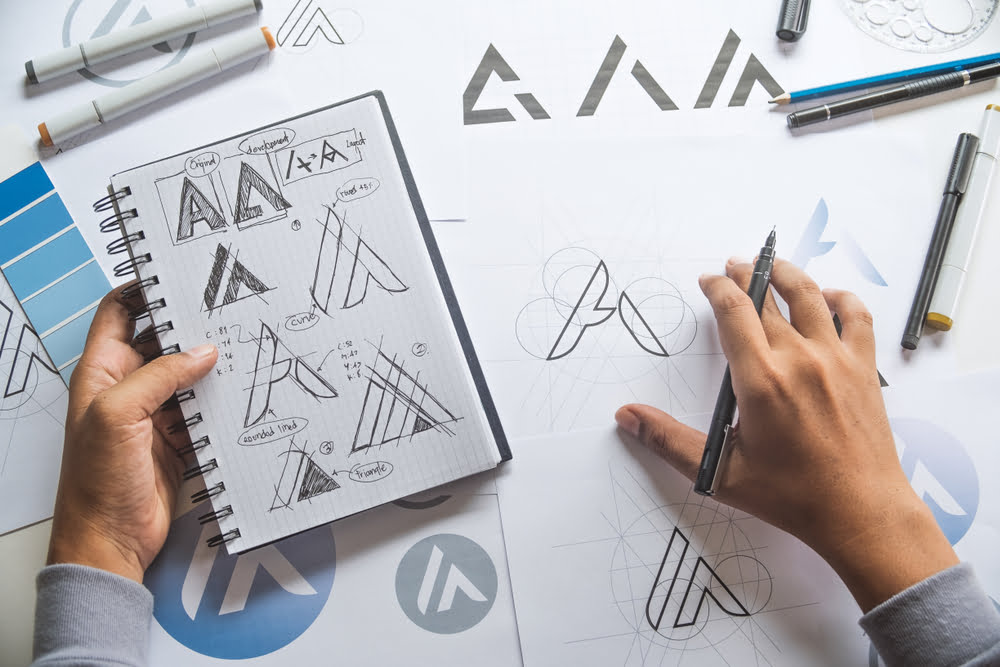
It's tempting to jam your corporate identity full of bells and whistles, but the strongest identities are still the simplest ones. When designing a logo, it's easy to go overboard. There are so many great elements you can work with (colors, textures, patterns, shapes, borders, typography, gradients,…

Science fiction’s bleak futures mirror your customers’ daily frustrations. Trade quick wins for human-centered marketing that honors real lives and belonging. Solve problems, restore connection, and watch your brand grow.

Agile began as a manifesto and became an industry. When design teams adapt it without dogma, tension turns into flow, scope changes stop derailing, and client collaboration beats paperwork.

When people talk about their company’s target audience, you typically hear things like “individuals between the ages of 13 and 25 who enjoy playing video games and have a mobile phone,” or “active consumers between the ages of 25 and 45 who like to hike and rock climb” or “procurement officers at Fo…

Smell sells. Tap scent marketing’s subconscious power to lift mood, memory, and sales. Choose simple, context-smart fragrances, tune the intensity, and watch productivity rise without customers noticing why.

Stop casting wider nets and fix the holes. Competitive CEOs chase metrics while customers crave emotion. Talk to people, design sticky experiences, and watch each effort land more loyal customers.

If your team was the last surviving band of humans in a city overrun by zombies, you wouldn't let just anybody through the door would you?
When designing a logo, it’s easy to go overboard. There are so many great elements you can work with (colors, textures, patterns, shapes, borders, typography, gradients, icons, etc.) that it’s tempting to include a little bit of everything to get your point across. In a massively oversaturated media…

We’re naturally attracted to people and brands that stand for something, and we’re suspicious of those that try to mold themselves around our preferences. Imagine this. You’re on a blind date. > You: “So, where do you want to go?” Date: “Wherever you want to go.” You: “Maybe dinner? What kind of foo…

Archetypes are based on the idea of universal, reoccurring characters or personifications that represent something fundamental about the ways we identify ourselves and relate to the world around us. A few years ago, we began the process of gathering raw archetypes from as many sources as we could. I…

Once you’ve sorted out your company’s roots (purpose, values, style, etc.), you’ll find yourself faced with the challenge of trying to hold all that information in your head when making a decision. One of the best tools for dealing with this situation is a metaphor: a concept that ties these element…

One of the great dilemmas in marketing is whether to trust your instincts over what the research is showing you. Both the agency (“we know how people think”) and the client (“we know our clients”) have important insights that might not show up clearly in the research, but research can often reveal h…

Business is historically a male-dominated endeavor, so it’s no surprise that the stereotype about what it takes to succeed in business involves traditionally masculine characteristics: aggression, tactical thinking, bravado, ruthlessness, objectivity, ego, pride, sports metaphors, war metaphors, etc…

Over the years, we’ve found that there are three foundational elements to almost any brand: purpose, values, and style. ## BRAND PURPOSE Research cited in _Built to Last_ (by Jim Collins and Jerry Porras) indicates that purpose-driven companies can outperform the general market by a 15 to 1 ratio. T…